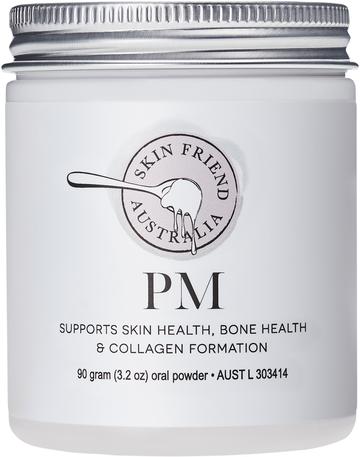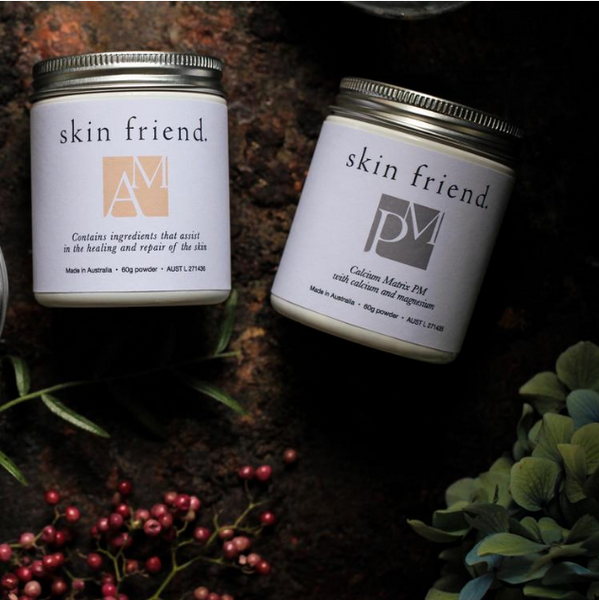
Can I take Skin Friend while I'm pregnant or breast feeding?

|Reception Support

Q: "I have severe eczema and I'm breastfeeding. Is it okay to take the Skin Friend supplements while I'm breastfeeding?"

During breast feeding, your body has increased nutritional requirements in order to nourish both your baby and yourself. So taking extra vitamins and minerals can be an important part of your routine. Calcium, zinc, magnesium, vitamin C and a range of B vitamins are especially important during this time.

Nutritionist Karen Fischer often prescribes Skin Friend (Skin Friend AM and Calcium Matrix PM) to her patients who are breast feeding. During a consultation Karen checks if the mother is taking any prescription medications that might prevent the mother from taking supplements (i.e. medications such as blood thinning/heart medications). Karen also checks the patient's current use of supplements to ensure she does not double up on vitamins and minerals. 

If you are breast feeding we suggest checking with your doctor to see if you can take multi-vitamin/mineral supplements while breast feeding and/or on your medications. With your doctor's okay, it would be fine to take the Skin Friend supplements. 


Q: "I have eczema and I'm pregnant. Is it okay to take the Skin Friend supplements?"

During pregnancy, your body has increased nutritional requirements in order to nourish both your baby and yourself. We do suggest you take a pregnancy multivitamin as iron, folic acid, zinc, magnesium, vitamin C and a range of B vitamins are important during this time. Calcium is incredibly important for bone and skin health, and it should be taken separately as it blocks the absorption of iron and zinc (if taken at the same time). 

Nutritionist Karen Fischer often prescribes Calcium Matrix PM to her patients who are pregnant along with a pregnancy multi-vitamin and mineral supplement that is designed for use during pregnancy. A modified diet that is suitable for pregnancy (part-program, not the full Eczema Diet) is also prescribed to clear up the eczema. The part program is included in a section within the Eczema Diet book.

It is wise to check prescription medications that might prevent you from taking supplements. If you are taking medications or if you are pregnant or breast feeding we suggest seeing your doctor for professional advice. 

Products 

At Eczema Life, we recommend nutritionist Karen Fischer's low food chemical program (The Eczema Detox) along with additive-free supplements for skin health and wellbeing. Click on the images to view more details:
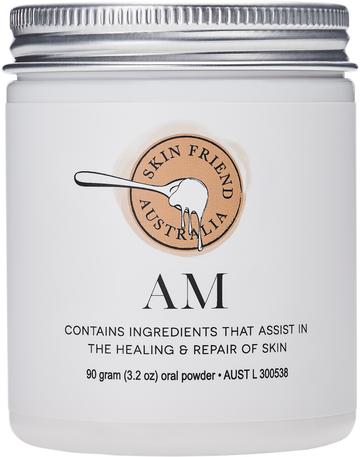


The Eczema Toolkit

the holistic way to clear skin

The Eczema Detox is Karen Fischer's latest best-selling eczema manual designed to help you find relief. Through her work she found some patients needed a special program to identify personal triggers, so the FID Program was created. The Eczema Clear Skin Toolkit combines gut health and nutrition with soothing, barrier repair skincare and supplements to calm the itch and support skin repair, the immune system and more. If you’ve tried everything and nothing has worked, this is the skin calming toolkit you've been praying for.

learn more

Eczema Friend

the itch buster  |  rash cream

The low pH eczema cream that helps to relieve itchy skin, red skin rash and mild eczema and dermatitis. Suitable for all types of rashes. It's the cream you'll wish you had tried first.

learn more

Frequently asked questions

Does food allergy trigger eczema?

Food allergy and eczema are closely linked, and allergies can absolutely make eczema worse, but they're often not what starts it in the first place. In fact, research suggests the reverse may be more accurate: eczema itself may come first and increase the risk of developing food allergies, rather than the other way around (Tsakok et al. 2016). One study found that babies with eczema were up to six times more likely to become
sensitised to foods compared to those without eczema. In children with established eczema, up to 66% showed food sensitisation, with confirmed food allergy in up to 81% of cases (Tsakok et al. 2016).

If you or your child has a diagnosed food allergy, those foods should be avoided for now. For additional guidance, the Food Intolerance Diagnosis (FID) Program in The Eczema Detox book can help identify food intolerances that do not show up in allergy tests (see next FAQ).

Do food allergy tests help eczema?

Skin prick tests and other food allergy tests including blood tests and patch tests can be unreliable on their own, so an oral food
challenge (supervised by an allergy specialist if you are prone to anaphylaxis), is the most accurate way to confirm whether you or your child is reacting to a particular food. For additional guidance, the FID Program in The Eczema Detox book can help you to identify your personal triggers.

About the authors

Ren Karen Fischer is a nutritionist, mother of two, and award-winning author of seven books, including the bestsellers The Eczema Diet and The Eczema Detox. Fischer is also a peer-reviewed published researcher, and is currently undertaking eczema research as part of a Master's by Research at Bond University. Combining clinical research with real-world experience, she is dedicated to advancing evidence-based care for eczema.

Nutritionist Bonnie Taylor holds a Bachelor of Health Science degree and helps people with eczema identify their individual triggers through the FID Program. Taylor has worked alongside Fischer for many years and offers nutrition consultations by appointment.